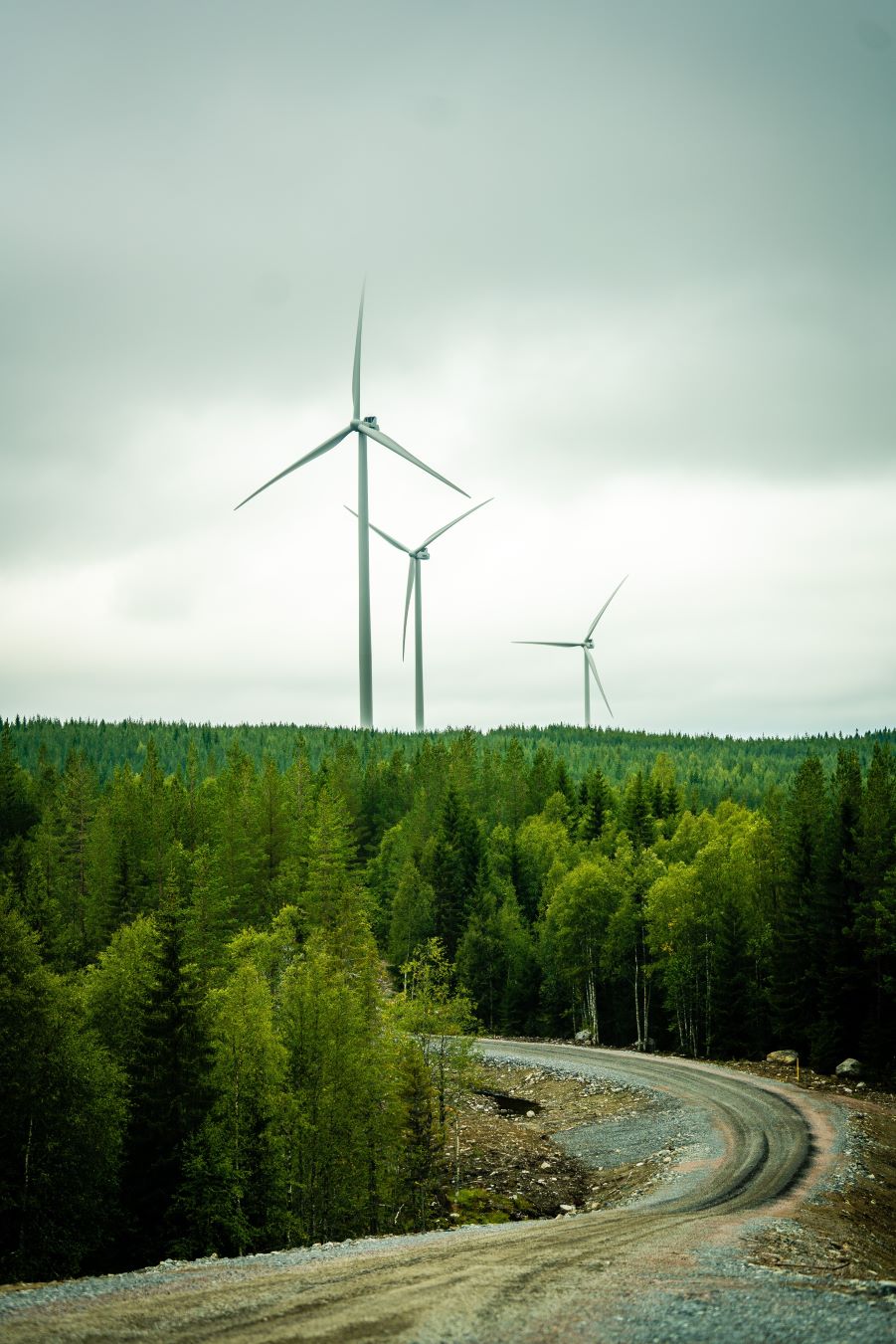
Under certain weather conditions, ice can form on the rotor blades, which may create a risk of ice throw. Safety distances and procedures are defined as part of the project’s safety management and may be regulated through permit conditions and supervision.
Further details:
If ice that has formed on the blades detaches, it can be thrown some distance from the turbine. The risk depends on climate, operation, and technology, and is managed through safety distances, warning routines, and sometimes de-icing systems or automatic shutdown functions. Permits and safety planning describe how these risks are handled, including signage and operational procedures during icing conditions.
According to the Swedish Energy Agency, the risk of a person being injured by ice throw from a wind turbine is extremely low, with no reported cases of injury (2026). Therefore, there are no requirements to fence off wind turbines in Sweden. However, guidelines for safety distances are provided and should be followed under certain weather conditions.
How far is the safety distance?
The distance depends on wind direction, and the most precautionary recommendation is 1.5 times the height of the tower plus the rotor diameter. For modern wind turbines, this typically corresponds to exercising extra caution within approximately 500 meters of the turbine when there is a risk of ice formation.
Sources:
https://portal.research.lu.se/sv/publications/numerical-modelling-of-the-ice-throw-from-wind-turbines/